
How a Consensus Winner Evolved from Solo Cover to Sami
The ShopExp team receive their Award from (2nd left) Richard White, Founder & CEO, WiseTech Global and (right) Julian (Jolly) Day Founder & CEO of Consensus.
Solo Cover | Consensus Innovation Award Winner 2018
In 2018, the gig economy was booming. The insurance industry, however, hadn’t quite caught up.
Traditional insurance products were largely built around traditional ways of working. For freelancers, contractors and other independent workers, finding appropriate cover could be complicated, expensive and poorly suited to the way they actually earned a living.
Solo Cover saw the gap.
Its technology-led approach to insurance for independent workers caught the attention of the Consensus judges and earned the company a 2018 Consensus Innovation Award.
But Solo Cover wasn’t the end of the story.
An early bet on a changing insurance industry
Solo Cover was created around a simple idea: insurance should adapt to the customer, rather than forcing customers into products designed for another era.
The platform sought to make accessing and managing insurance simpler for independent workers, using technology to remove some of the complexity traditionally associated with the industry.
It was an increasingly relevant proposition.
Australia’s workforce was changing, digital financial services were accelerating and consumers were becoming accustomed to managing everything from banking to investments through increasingly sophisticated digital platforms.
Insurance was ripe for the same treatment.
Consensus recognised Solo Cover’s approach in 2018, awarding the business a Consensus Innovation Award.
What followed was an evolution well beyond the product that originally appeared before the judges.
From Solo Cover to Sami
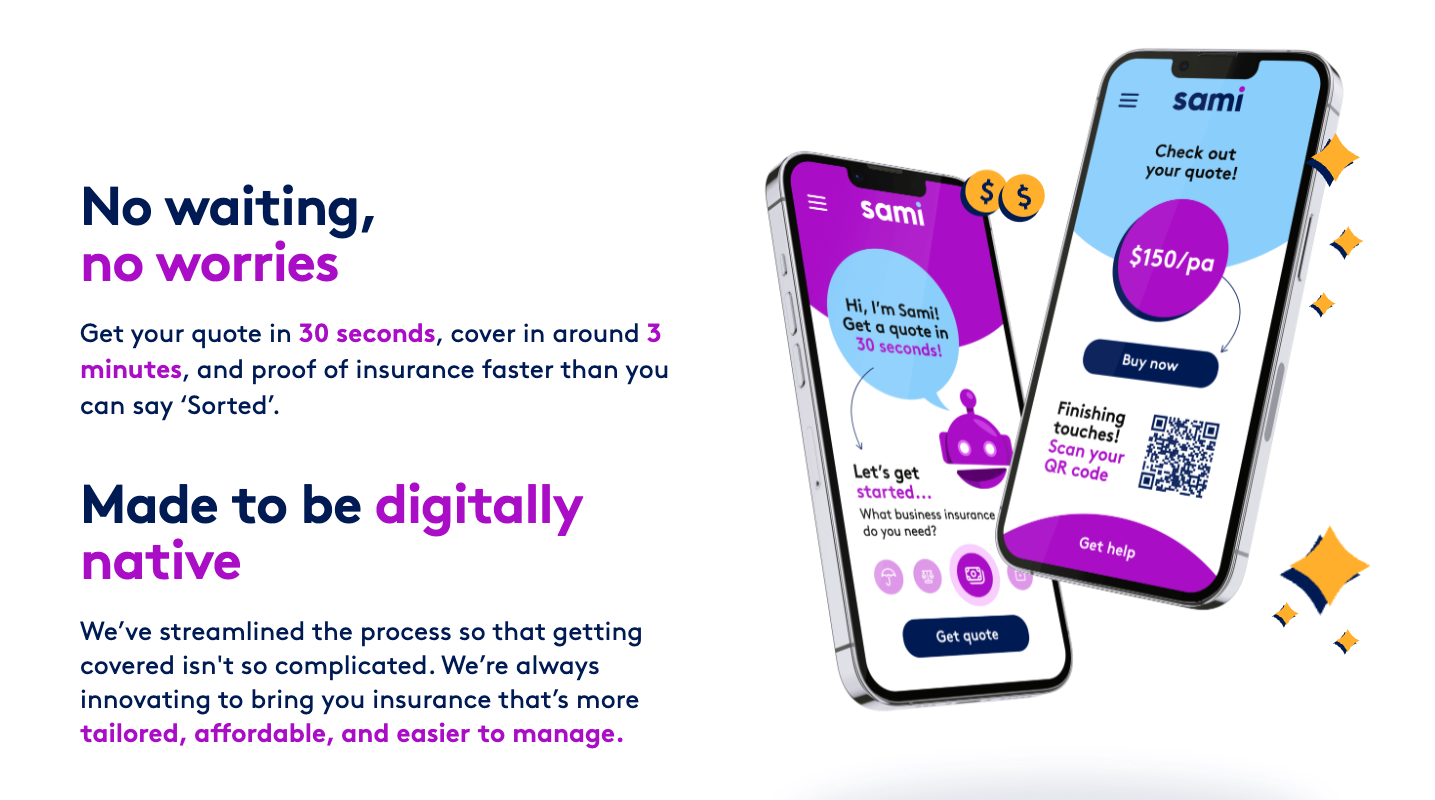
The business behind Solo Cover subsequently evolved into Sami, turning its attention to another enormous and notoriously complex corner of the insurance market: private health insurance.
Sami set out to rethink the way Australians find and manage health insurance, applying technology to a category often characterised by complicated policies, difficult comparisons and considerable consumer confusion.
Rather than simply digitising the traditional insurance experience, Sami was built around making the process itself easier to understand.
The evolution from Solo Cover to Sami represented a much broader ambition.
The original problem may have been insurance for independent workers, but the underlying opportunity was bigger: using technology to create a simpler relationship between people and insurance.
Building a new kind of insurance experience
Sami developed technology designed to help consumers navigate private health insurance and better understand the cover available to them.
The company’s proposition combined digital technology with insurance expertise, creating a platform intended to remove friction from choosing and managing health cover.
It was part of a much larger transformation taking place across financial services.
Fintech had already changed expectations around banking and payments. Insurtech businesses were beginning to ask why insurance couldn’t undergo the same transformation.
Solo Cover had been asking versions of that question years earlier.
The idea changed. The problem-solving mindset didn’t.
Perhaps the most interesting part of the Solo Cover story is that success didn’t mean remaining wedded to the product that won the award.
Technology companies evolve. Markets change. Founders discover bigger opportunities.
The ability to recognise that and move with it is often what separates an innovative product from an innovative company.
Solo Cover identified an underserved market and challenged the conventional insurance model. Sami took that same thinking into a significantly larger consumer category.
The name changed. The market changed. The ambition grew.
But the underlying principle remained remarkably consistent: insurance could be made simpler, more accessible and better suited to the people buying it.
Recognising innovation before the destination is obvious
When Consensus recognised Solo Cover in 2018, it wasn’t recognising Sami.
Sami didn’t yet exist in the form it would later take.
It was recognising the thinking behind what came next.
That is one of the more fascinating things about looking back across more than 25 years of Consensus winners. The product standing before the judges isn't always the product that ultimately defines the company.
Sometimes the strongest signal is the ability of the people behind it to identify a problem, challenge an established industry and keep evolving.
Solo Cover did exactly that.